Give each line a situation
Game dialogue is often recorded outside narrative order. The actor may move from a quiet discovery to a combat response without hearing the scene between them. Prepare concise context for each group of lines: who is listening, what has just happened, what the character wants and what changes if the line succeeds. This gives a performer an action rather than a disconnected instruction to sound emotional.
Keep stable line identifiers separate from script text. A revised sentence should not silently inherit the wrong implementation reference. Mark pronunciation, fictional terminology and alternative readings before the session, with an agreed authority for resolving uncertainty. A short pronunciation recording can be useful, but it should clarify the word rather than prescribe the entire performance around it.
Build a repeatable technical starting point
Record a brief test covering the likely performance range, not just conversational speech. Set recording gain with room for louder moments, then evaluate the quiet passages for noise. A high-resolution recording format does not repair clipping earlier in the analogue path. Check the microphone, preamplifier and any processing individually, and keep the capture chain simple enough to understand.
Document microphone position, orientation, performer distance, pop-filter position and relevant room conditions. Photographs can help when permissions allow, but written measurements and setup notes remain valuable. Matching pickups requires more than loading the same software session. Changes in posture, distance or room treatment may alter the voice enough to make editing difficult.
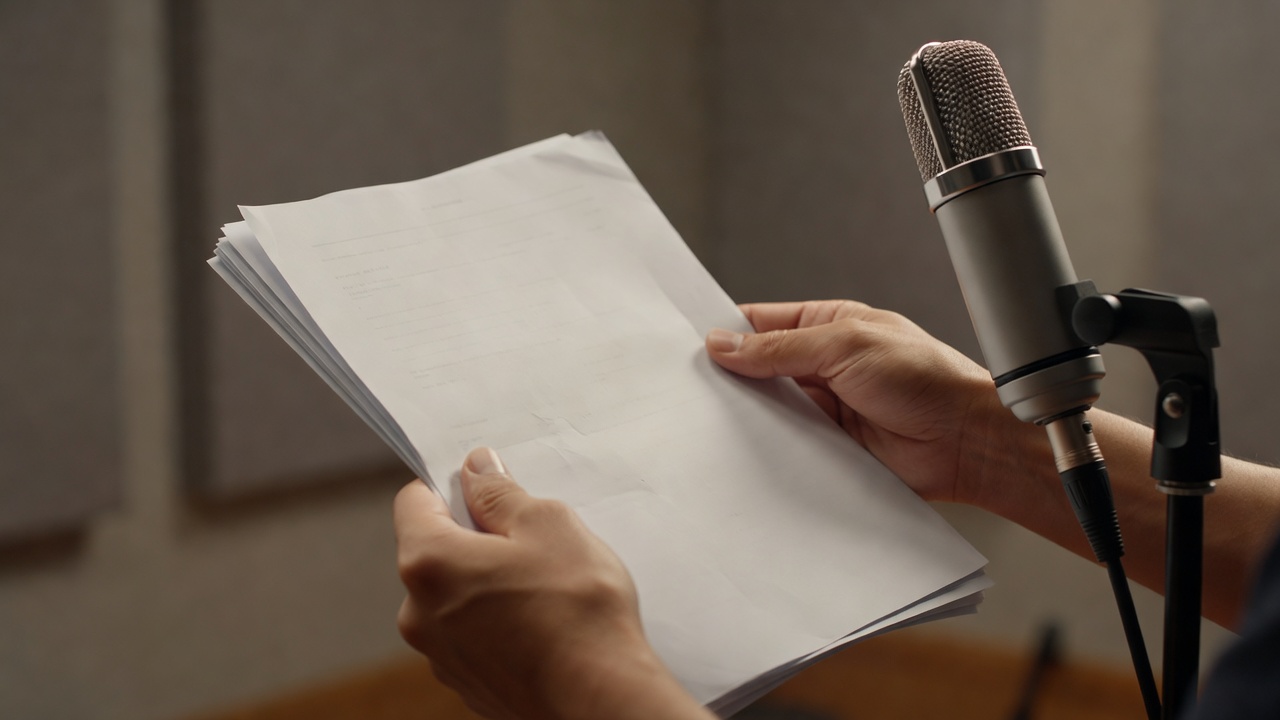
Make direction specific and playable
“More energy” can mean louder, faster, more urgent or more invested. Say which change you need. A useful direction might ask the character to keep a companion from leaving, conceal an injury or make a warning heard across a room. These actions can create a stronger performance than an abstract intensity label, particularly when the actor understands the intended listener.
Change one important variable at a time when diagnosing a take. If timing, emotional intention and pronunciation all need attention, establish priorities rather than delivering a list of competing corrections. Acknowledge when the requested change has worked. Otherwise, performers may continue pushing beyond the useful range because the session gives them no clear sign that the target has been reached.
Plan demanding material with care
Combat efforts, creature voices, shouting and sustained vocal extremes need explicit planning. Discuss the scope in advance and follow applicable contracts, union provisions and professional advice. SAG-AFTRA and Equity publish performer-facing guidance and agreements; the relevant terms depend on the engagement and jurisdiction. Do not treat a general online article as a substitute for the agreement governing the session.
Build breaks and an appropriate sequence into the schedule. Avoid repeatedly asking for maximum intensity simply because several stakeholders want options. Stop if a performer reports pain or distress, and agree a different approach rather than treating discomfort as proof of authenticity. Specialist vocal coaching may help with demanding techniques, but production pressure is not a safety method.
“Make the next take a clear invitation, not a test the performer has to guess.”
— Roverbravilo editorial principle
Keep remote participation separate from capture quality
A remote director may hear a compressed monitoring feed while the studio records a clean local signal. Explain that distinction before judging subtle sound quality over a call. Confirm who starts recording, who maintains the take log and how communication failures are handled. Tools such as Source-Connect can support remote workflows, but their role and configuration still need to be agreed for the specific session.
Nominate one person to consolidate creative feedback. Multiple open microphones can turn a useful pause into contradictory direction. Keep talkback out of recorded performances, manage notification sounds and establish a simple stop signal. If connection quality deteriorates, pause for clarification rather than recording a long run of takes against misunderstood instructions.
- Pop filter
- A screen used to reduce direct air blasts from plosive consonants without replacing good positioning.
- Talkback
- A communication route for direction that should remain distinct from the captured performance.
- Pickup reference
- An approved earlier recording used to match character, delivery and technical tone during later sessions.
Finish with continuity, not just completion
Before releasing the performer, check missing identifiers, pronunciation decisions and any unresolved technical concerns. Save selected references for future pickups and record why alternatives were requested. The goal is not merely to mark every line as recorded. It is to leave performances that editors can identify, directors can defend and players can believe when the surrounding scene finally comes together.